
Last updated November 22, 2026
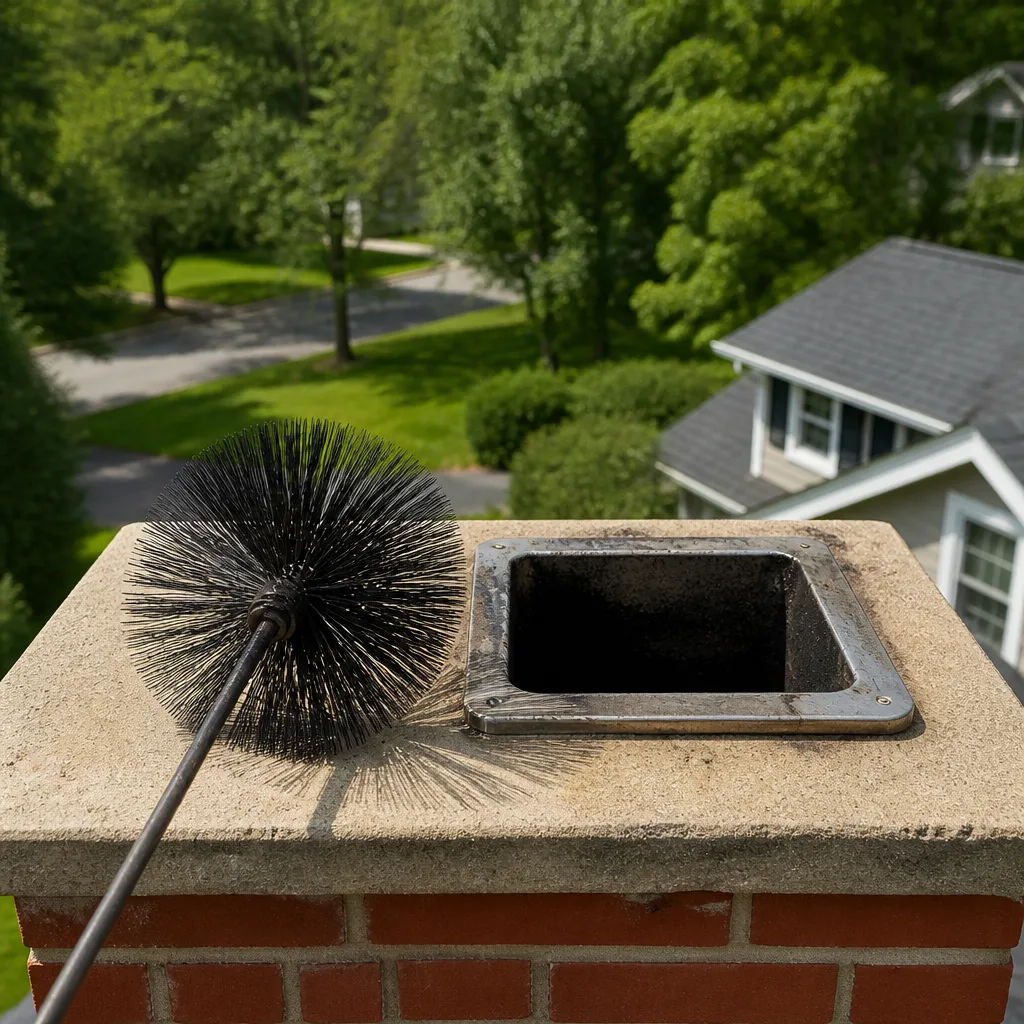 Sweep & inspection
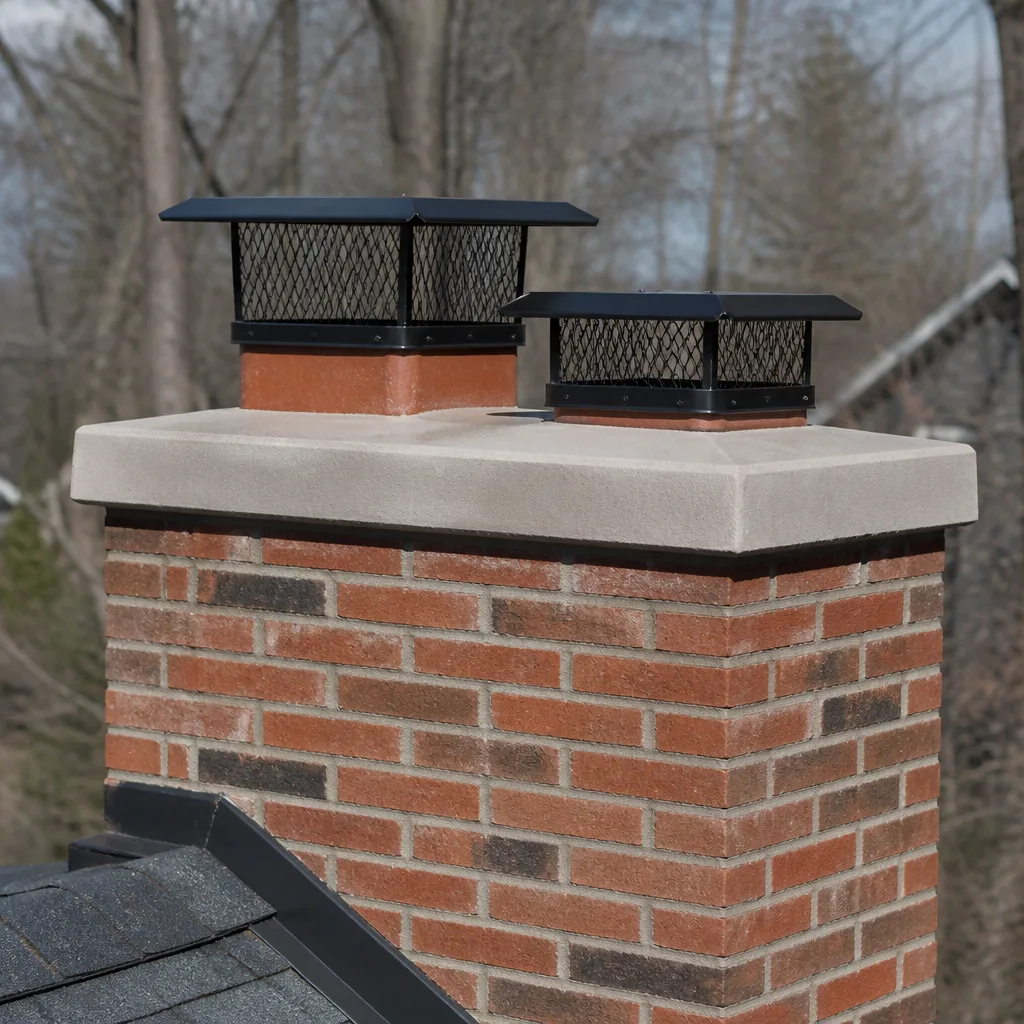 Caps & crowns
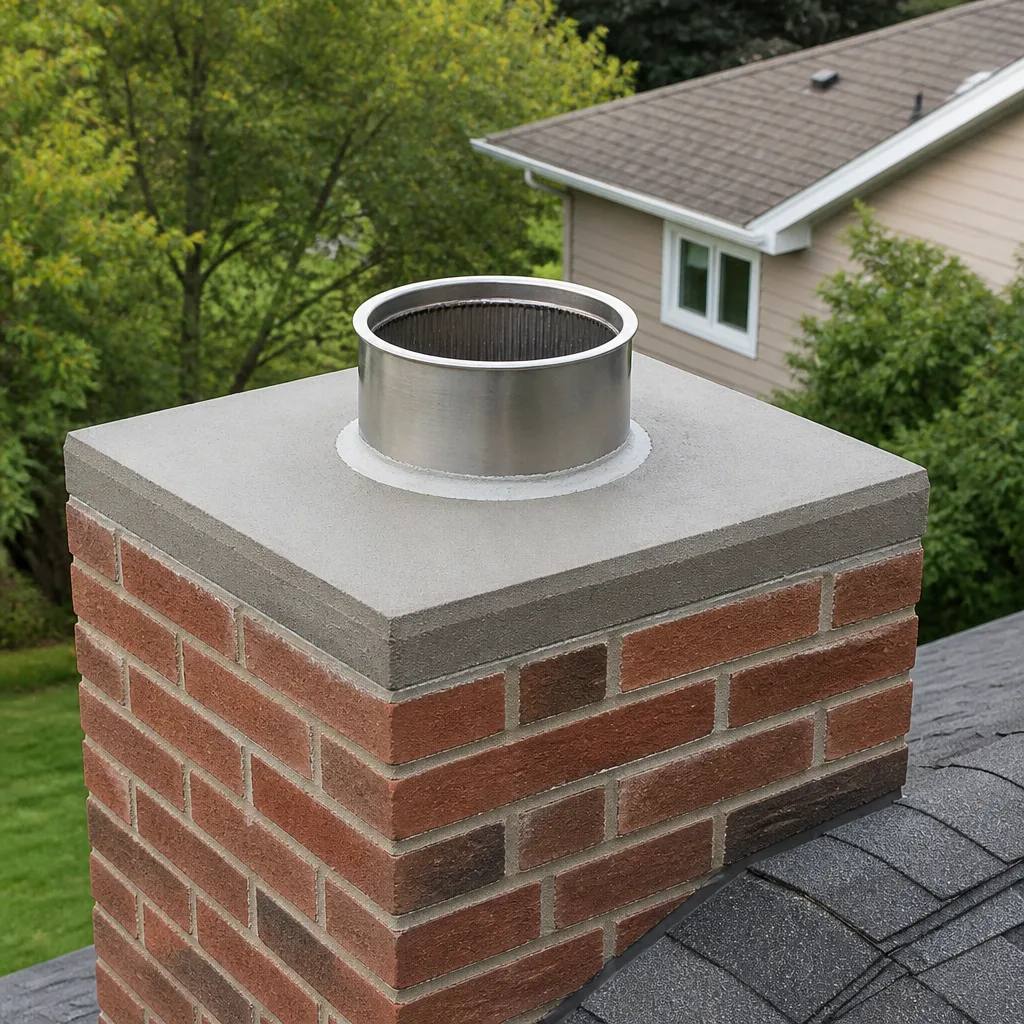 Flue relining
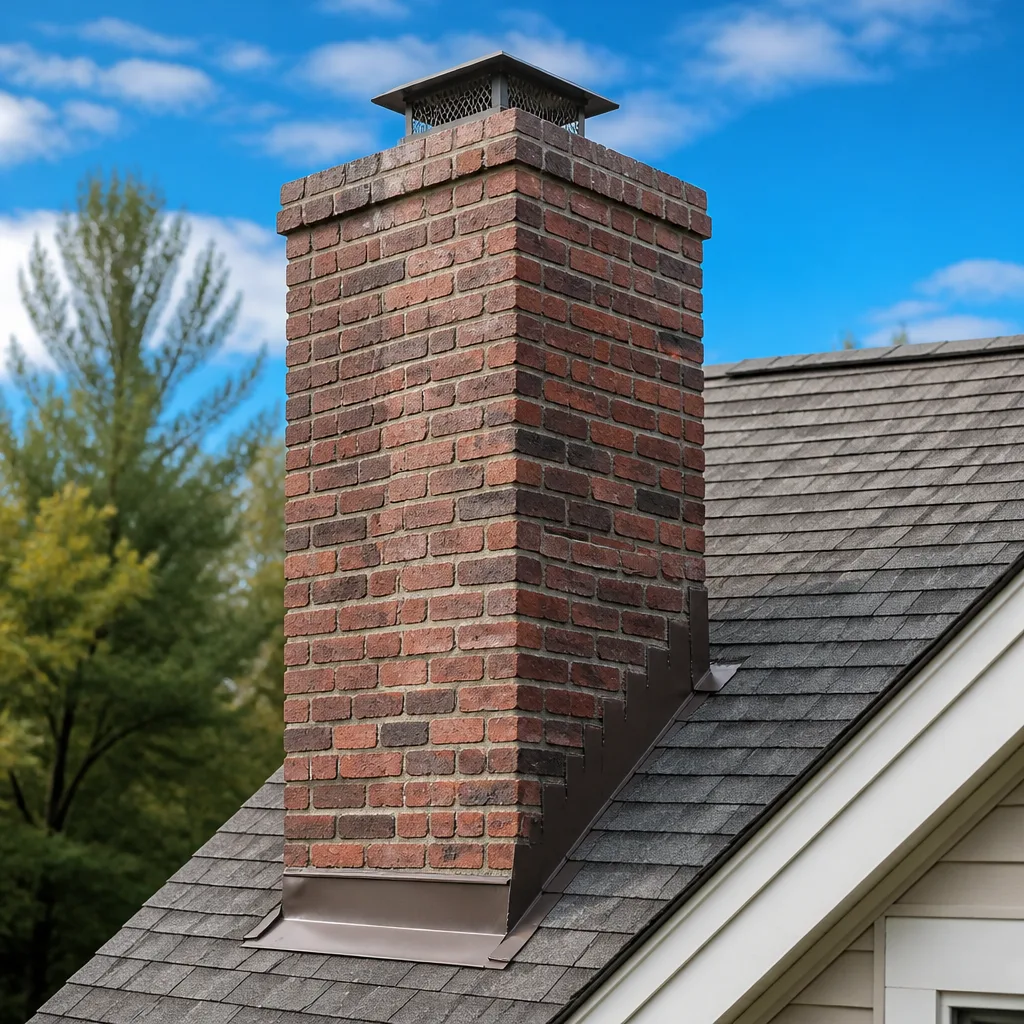 Masonry repair
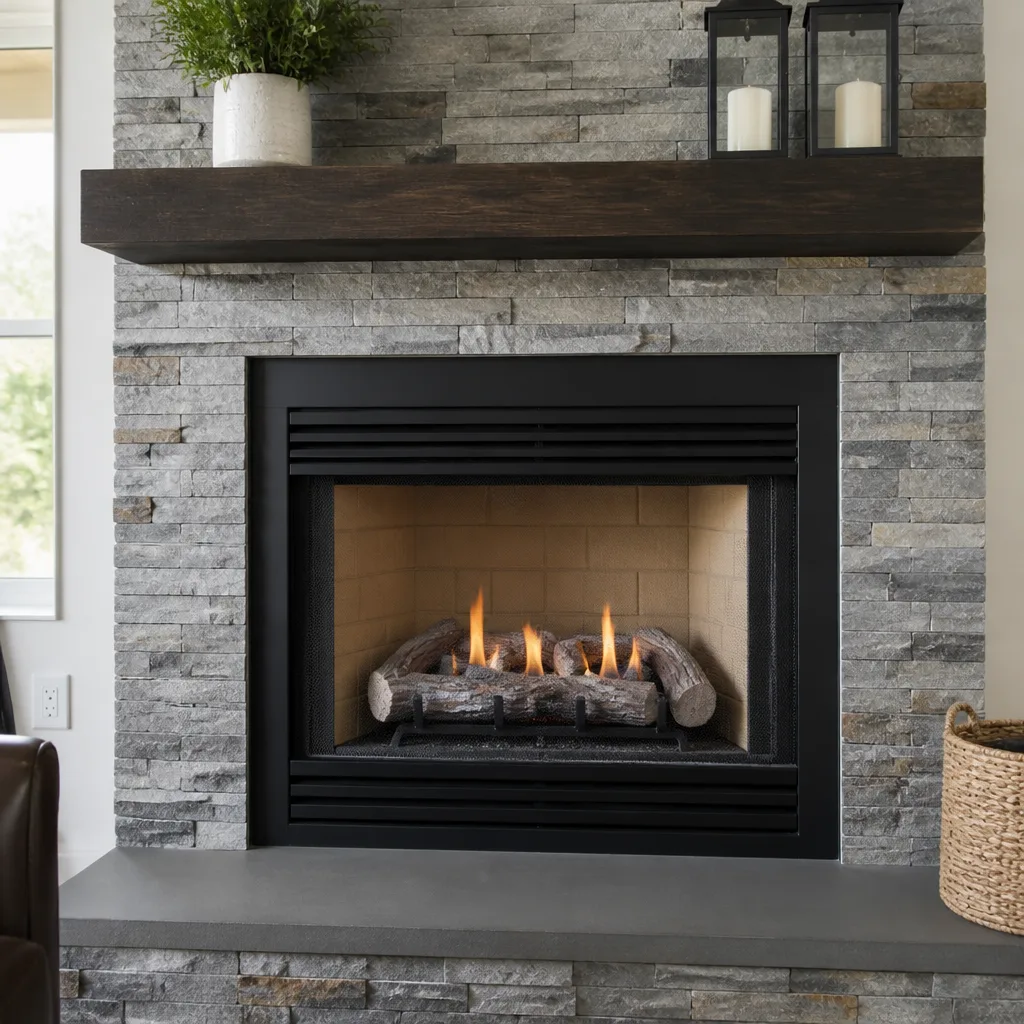 Gas fireplace service
Level 1 sweep and inspection to the NFPA 211 annual standard - flue, crown, cap, and flashing checked and photographed
Chimney sweep logs do not sweep chimneys. They loosen some creosote - which then falls where a brush and vacuum still have to collect it.
DIY vs Professional Chimney Cleaning: The Kensington Homeowner’s Decision Guide
You can buy the same brushes a professional uses. What you can’t buy is the ability to identify a Stage 2 creosote buildup, a hairline flue crack, or a deteriorated smoke chamber without training and inspection tools. That’s the gap most DIY chimney projects fall into, and it’s not a skill gap so much as an assessment gap. The brush reaches the flue; the eye doesn’t reach the problem. This guide is built to help Kensington homeowners draw an honest line between what’s genuinely doable on a Sunday afternoon and what needs a trained set of eyes and a camera. We’ll cover equipment reality, the creosote dividing line, insurance exposure, and a decision matrix you can apply to your own chimney this week.
Quick Answer
For most Kensington homeowners, DIY chimney cleaning is reasonable only for basic maintenance: ash removal, ground-level visual checks, and cap inspection. A professional sweep is worth it whenever you can’t see the flue interior, whenever it’s been more than a year since the last inspection, whenever creosote has built up beyond a light dusting, or whenever gas or oil appliances vent through the chimney. The dividing line isn’t your willingness to work; it’s whether you can accurately assess what’s inside a shaft you can’t see.
Styles & brands we work with
- Sweep & inspection
- Caps & crowns
- Flue relining
- Masonry repair
- Gas fireplace service
Table of Contents
- What a homeowner can legitimately do themselves
- Where DIY creates more risk than it eliminates
- Why creosote assessment is the dividing line
- Equipment reality check: brushes, vacuums, and cameras
- The insurance question after a self-performed sweep
- The decision matrix: chimney age, inspection date, fuel, and usage
- How a professional sweep actually works, step by step
- When to call a professional
What a homeowner can legitimately do themselves
Let’s start where DIY actually works. There are real tasks you can handle without stepping onto a roof or reaching into a flue, and doing them well supports the professional work rather than competing with it. In Kensington and the surrounding older housing stock, most chimneys are masonry, and the simpler upkeep tasks genuinely belong to the homeowner.
These are the four jobs we’d list as legitimately DIY for a careful homeowner:
- Ash removal: Clear cooled ash from the firebox and ash pit with a metal scoop and a sealed metal container. Ash piles reduce draft and displace wood volume. Wait at least 24 hours after the last fire before touching it.
- Ground-level visual checks: Stand back from the house and look at the chimney from several angles. Check for leaning, cracked mortar, missing cap sections, white staining, or staining at the top of the exterior wall. Ground-level checks catch water intrusion before it becomes structural.
- Cap inspection from below: Use binoculars to verify the chimney cap is intact, perforated or louvered, and free of bird nests. A missing or damaged cap is the most common entry point for water and animals.
- Firebox and hearth cleanup: Sweep up soot and debris around the hearth, check the firebox for loose brick or crumbling firebrick mortar, and confirm the damper opens and closes cleanly. Report anomalies; don’t fix them yourself.
What you should not do yourself: sweep the interior flue, remove or inspect a liner, disassemble the smoke chamber, climb the roof, or evaluate the interior of the chimney above the damper. Those tasks require tools and training that pay for themselves in a single visit, and one of them requires the ability to accurately judge creosote depth inside a shaft with no light and no obvious sound cues.
Where DIY creates more risk than it eliminates
Every DIY chimney task has a risk profile. Some are low: dropping something into the firebox while emptying ash. Some are high: pulling a brush through a flue with a liner tie the homeowner can’t see. The ones worth flagging here are the jobs that can worsen the condition they’re meant to fix or that hide a problem rather than clear it.
The most common DIY-generated risks we encounter:
- Brush damage to a clay tile liner: Consumer brushes with stiff wire often catch on a cracked or spalled tile edge. The tile chips, the brush stops short, and the homeowner assumes the flue was swept. In reality, a partial break in a tile is now a path for moisture and heat into the surrounding masonry.
- Pushing creosote to a glaze: Aggressive brushing of soft creosote in a cool flue can press the deposit into a hard glaze rather than removing it. Stage 3 glazed creosote bonds to the liner and resists hand brushes entirely.
- Disturbing the smoke chamber: Homeowners don’t always know the smoke chamber (the sloped area above the damper) is a different construction zone from the flue. Brushes sent through at the wrong angle abrade the parging.
- Damaging a liner connector: Gas and oil appliances vent through chimneys with metal connectors that can be dislodged by a poorly routed brush. That’s a flue-gas leak path.
- Falling from a roof: Roof access is the leading cause of DIY chimney injury. Chimney caps and crowns should be inspected by a professional who has the laddering and fall-protection habits to do it safely.
The right material for your chimney’s condition isn’t always a brush. Sometimes it’s a resurfacing product like HeatShield applied to the smoke chamber or upper flue. Sometimes it’s a relining with a product like DuraFlex. The reason professional chimney work is worth the cost is that it produces an assessment and a repair plan in a single visit, not just a swept flue.
Why creosote assessment is the dividing line
Creosote is the primary reason chimney cleaning exists, and it’s the single factor that separates a safe sweep from an unsafe one. It’s a residue that forms whenever wood burns with insufficient draft or off-gas prior to ignition. It builds in three stages, and each stage carries a different risk profile and requires a different removal approach.
- Stage 1 – soft creosote: A dusty, flaky coating that a hand brush can remove. Common in well-drafted, hot-burning fireplaces. Rated as easy to sweep.
- Stage 2 – hard and crusty: A brittle, tar-like layer that brushes alone often won’t clear. It requires chemical creosote remover, rotary tools, or both. This is the stage most DIY brushes fail against, and it’s where homeowners assume success when the brush feels easy to push.
- Stage 3 – glazed: A hard, glossy layer that fuses to the liner. Brush-resistant entirely and considered the highest chimney-fire risk classification. Professional equipment and, often, relining are usually specified.
You can’t see creosote depth from inside the firebox. You can’t see it during a brush pull either, because the brush is moving and the lighting is poor. Professional chimney sweeps carry flashlights, mirrors, cameras, and the trained pattern recognition to distinguish a light Stage 1 coating from a Stage 2 buildup that needs chemical treatment. In Kensington’s older homes, where the chimneys were built for soft-coal or wood fires decades ago and often vent less efficiently than modern flues, Stage 2 buildup shows up more frequently than most homeowners expect.
That gap, between the work the brush does and the assessment the eye can make, is why we specify professional-grade materials when the assessment calls for repair. The chimney vents fire. The materials should match.
Equipment reality check: brushes, vacuums, and cameras
A homeowner can buy a polypropylene chimney brush and a fiberglass rod kit for well under a hundred dollars. A professional kit costs hundreds. The gap in cost is not the gap in results; the gap in results comes down to three pieces of equipment most DIY collections never include.
| Equipment | Consumer version | Professional reality | What it unlocks |
|---|---|---|---|
| Brush head | Basic poly or wire brush, one diameter | Sized brush selections for round, square, and rectangular flues | Full-wall coverage without gouging tile edges |
| Debris vacuum | Shop vac with a HEPA filter | HEPA filtration rated for fine soot, sealed room capture | No soot reintroduced into the room air |
| Inspection camera | Not typically available at consumer price | Articulated flue camera and still photo documentation | The only honest view of what’s inside the flue |
| Rotary tools | None | Rotary whip for Stage 2 creosote removal | Removal of crusted buildup that hand brushes miss |
| Chemicals | None | Chemical creosote remover, applied to spec | Loosening hard creosote without damaging the liner |
| Resurfacing and liner systems | None | HeatShield smoke chamber parging, DuraFlex liner systems | Repair of the damage the sweep reveals |
The gap in results shows up in two places. First, a homeowner-swept flue may look clean from the firebox but hold creosote at the top third where the brush never reached. Second, the flue is swept but never inspected. Without an inspection camera, no one knows if the flue interior has a hairline crack, a spalled tile, or a corroded liner connection. That’s the honest answer to the DIY equipment question: you can buy the brush, and you can pull it through the flue, but you cannot buy the ability to see what the brush is doing to the flue wall.
The professional-grade brands we work with, Famco and Copperfield among them, exist because consumer tools can’t handle the load of a real sweep. Famco’s brush catalog and Copperfield’s rod and rotary systems are the tools specified by chimney professionals nationwide, and the reason they cost more is that they don’t shred inside a flue on the third pull.
The insurance question after a self-performed sweep
This is the part of the DIY decision that gets the least attention and carries the most exposure. If a chimney fire follows a self-performed sweep, the question your insurer will ask is not whether you did the work; it’s whether the work was documented and whether the chimney was in safe condition at the time of the fire. Without a professional inspection record, you lose the paper trail that answers those questions cleanly.
Here’s what the honest framing looks like:
- Standard homeowner policies typically cover chimney fires as fire losses, so coverage rarely disappears entirely. The dispute is over cause, condition, and whether the homeowner was negligent.
- Negligence claims are the real risk. If the adjuster finds Stage 2 or glazed creosote present, or finds a cracked liner that should have been caught at inspection, the claim can be contested or partially denied on the grounds that the loss came from a condition the homeowner should have known about.
- Documented inspections shift the burden. A professional inspection report with photos, an assessment of creosote stage, and a written record of any needed repair puts the homeowner in a very different position. It says “the chimney was assessed and acted on,” not “the homeowner swept it and hoped for the best.”
- Some policies require chimney maintenance as a condition of coverage. If your policy stipulates an annual inspection, a receipt and report are part of the compliance. A DIY sweep provides neither.
We can’t speak for your insurer, and specific policy language varies by carrier. What we can say is that in Kensington and across the region, the homeowners who fare best in a chimney fire claim are the ones with a current inspection report. A camera inspection and photo report is included with a professional sweep, and that report is the document you’ll be glad exists if the worst happens.
The decision matrix: chimney age, inspection date, fuel, and usage
Weighting the four factors honestly requires knowing what each one actually tells you. Here’s how we frame it for Kensington homeowners making this call.
Chimney age. If the chimney is newer than roughly two decades and was constructed with a modern liner, DIY basic maintenance is reasonable. If it predates the 1970s, nearly every chimney we see has been through at least one fuel transition and probably one relining. Those need a professional assessment before any cleaning begins, because the sweep is the moment you find out the liner is failing, and you want someone qualified to look at it.
Last professional inspection date. If you can’t name a year, the answer is professional. An inspection sets the baseline against which every future decision is measured. Without one, the homeowner is guessing at the condition of the flue.
Fuel type. Wood vents through the flue and produces creosote. Gas and oil appliances vent through the same chimney but with their own liner and connection requirements. If your appliance is gas or oil, the DIY decision isn’t about the brush at all: it’s about the appliance connection. Anything vented through the chimney by a gas or oil appliance is professional work, full stop.
Usage frequency. A fireplace used five fires a year in Kensington has less creosote load than one burning six nights a week through December and January. As a general rule of thumb in the trade, once a year for an actively used wood-burning fireplace is the standard benchmark, and more often for high-volume burners.
Here’s the matrix as a decision:
- Chimney newer than two decades + known professional inspection within the last 12 months + wood-burning + light usage: DIY basic maintenance is reasonable, and schedule a professional sweep on an annual cycle.
- Any chimney older than two decades: Professional assessment, regardless of usage or prior sweep. Structural wear on older masonry and clay tile is common.
- Unknown inspection date, any chimney: Professional assessment. You don’t have the baseline to make a DIY call.
- Gas or oil appliance venting through the chimney: Professional, always. Flue gas and appliance connections aren’t homeowner territory.
- Heavy usage, or any past evidence of a chimney fire: Professional, urgently. A prior chimney fire can leave hidden structural damage.
How a professional sweep actually works, step by step
Knowing what a professional sweep includes helps you see the difference between a sweep and a sweep-plus-inspection. The best sweeps are done with a plan. In our work in Kensington, this is the sequence we follow, and it’s the standard you should expect when comparing providers.
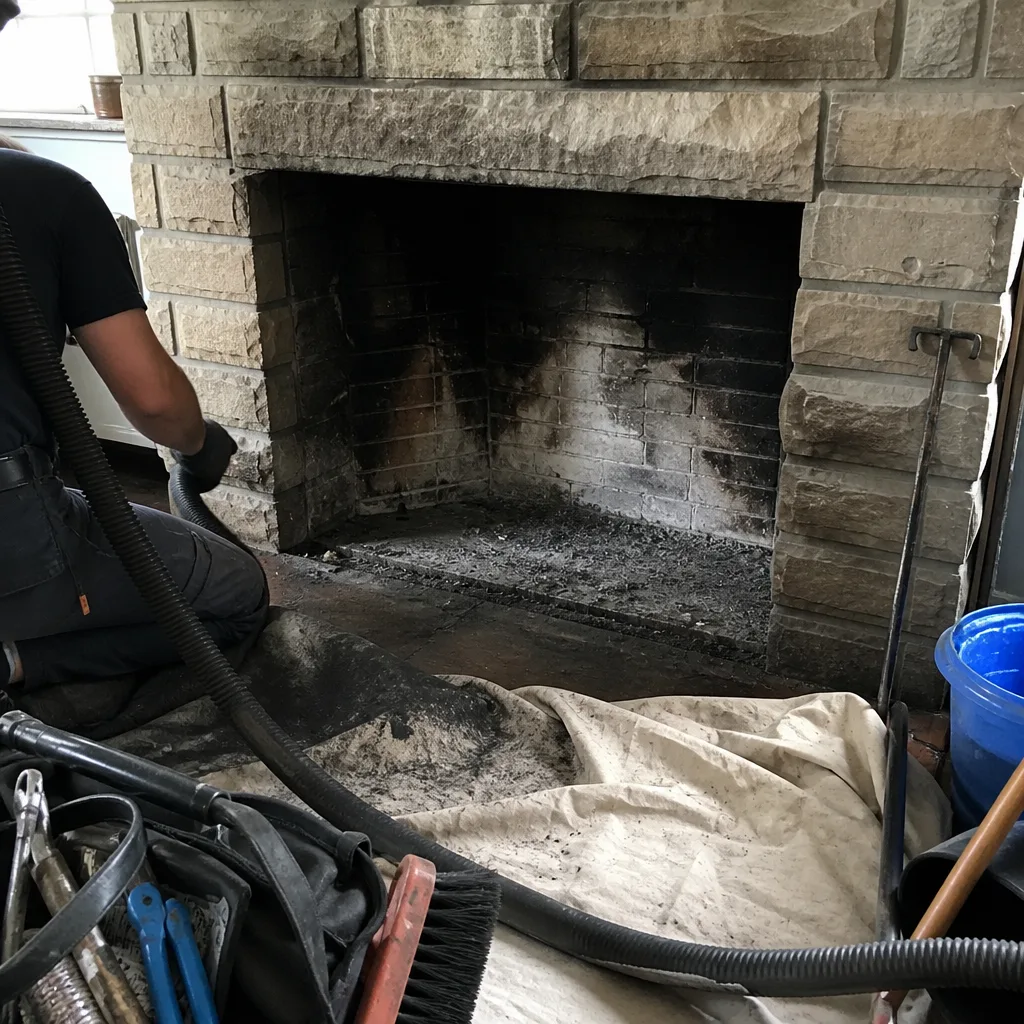
- Protect the room. Drop cloths and a sealed vacuum zone are placed before any tool touches the chimney. Soot capture starts before the brush does.
- Assess the firebox and damper. The firebox is examined for cracked or spalled firebrick, and the damper is opened and operated to verify smooth travel. Any hearth or surround issue is documented.
- Sweep the flue. The brush is sized to your flue dimensions and pulled through, with sealed vacuum capture running throughout. The brush selection is the first honest assessment of creosote stage; a hard pull against the wall tells the sweep what the creosote is doing.
- Inspect with a camera. This is the step most DIY work skips. A flue camera is run through the chimney, and the homeowner sees the interior walls, any cracks, any missing mortar joints, and any buildup that wasn’t addressable by brush alone. A photo report follows.
- Examine the exterior. Cap, crown, flashing, and masonry joints are checked. A cap with a missing section holds water onto the flue tile, which is the leading cause of masonry deterioration we repair. If a crown is cracked or a cap deteriorated, we quote it, and if the work can safely wait, we say so.
- Recommend only what the camera shows. If the flue needs resurfacing, we’ll discuss HeatShield. If the liner is failing, a DuraFlex liner system is the usual answer. If the fireplace box or damper needs repair, that’s part of the service. If nothing needs doing, we say nothing needs doing.
- Sweep, then rebuild is one crew. From the chimney cap and crown at the top to the firebox and damper at the bottom, our work covers the entire chimney system, which means no handoffs to another contractor when the sweep reveals structural work.
There are two things worth noting about that sequence. First, nothing gets recommended without camera evidence you can see for yourself. Second, we’ll say when work can safely wait. A chimney that needs attention in five years doesn’t need it today, and the report should be explicit about the difference.
Common Mistakes to Avoid
- Assuming a swept flue is a safe flue. A brush removes creosote, and only an inspection reveals liner condition. Sweeping without inspection is doing half the job, and the half that matters is the one you’re skipping.
- Skipping the exterior. A cracked crown or a missing cap section in Kensington’s freeze-thaw winters is a direct path to water intrusion. Water is the leading cause of chimney deterioration, and it’s the failure most easily prevented.
- Deferring inspection because the sweep “went fine.” A smooth brush pull tells you the wire didn’t snag. It doesn’t tell you the tile behind it is sound. That’s the distinction that trips up most homeowners.
- Not keeping the paperwork. If you had an inspection report and didn’t file it, you don’t have it. Keep the printed report somewhere you’ll remember, because if you ever need to make an insurance claim, that document matters more than the receipt.
- Mixing fuels through an unlined chimney. If a furnace or water heater vents into the same flue as a wood fireplace, the connection needs proper configuration. A brush can’t resolve that; a professional assessment can.
- Treating a gas-flued chimney as DIY territory. Flue-gas connections and appliance venting require a trained professional. Removing ash from a gas fireplace doesn’t change the assessment requirement.
- Waiting until after a chimney fire. The chimney fire usually happens at the creosote stage that a sweep was meant to remove. Routine inspection prevents the condition that causes the fire from sitting unnoticed.
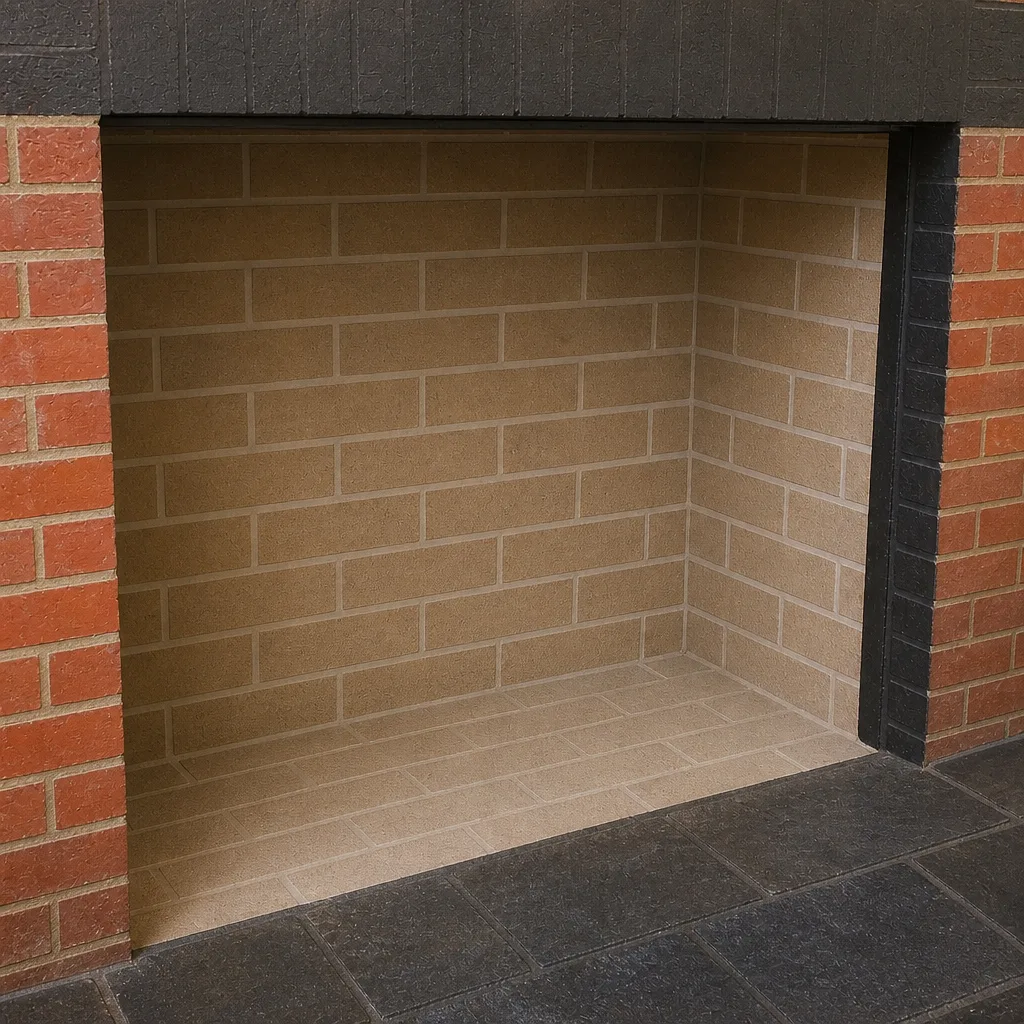
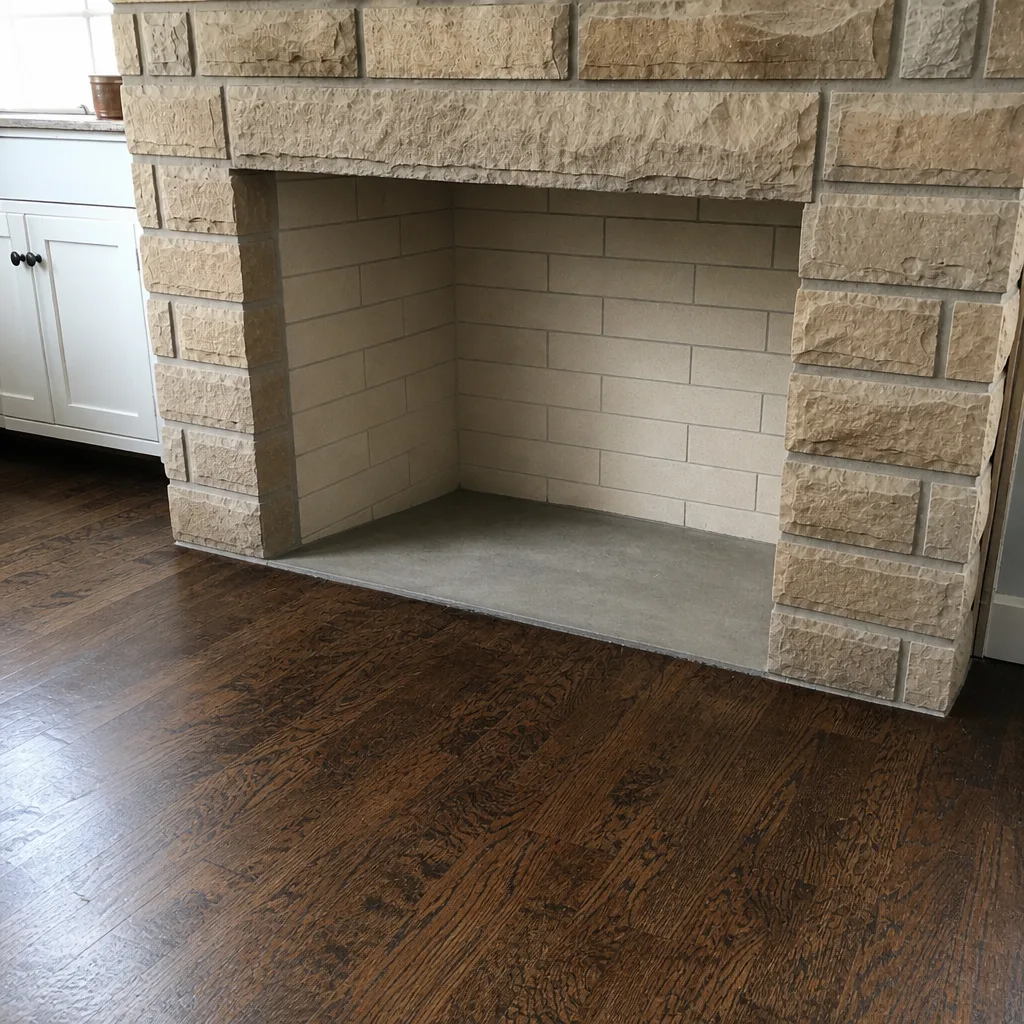
See the difference
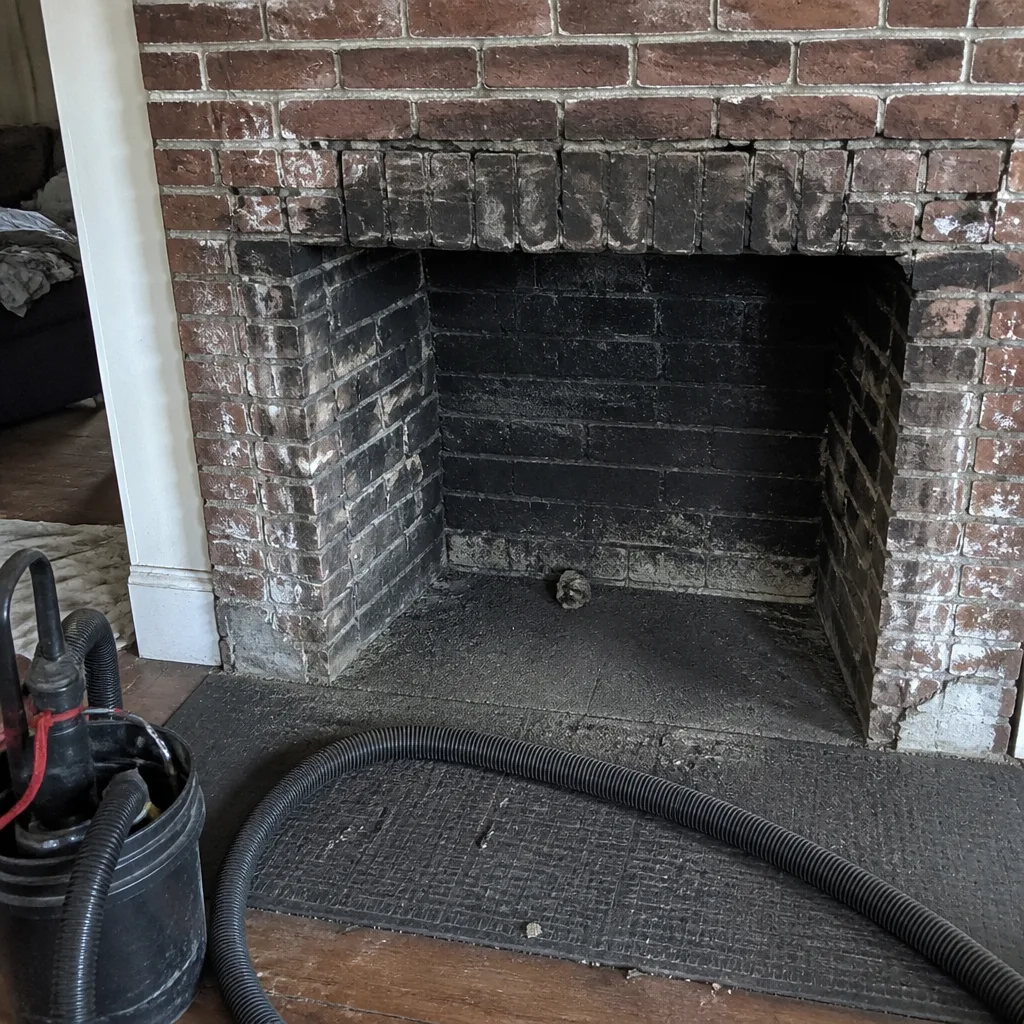 Before
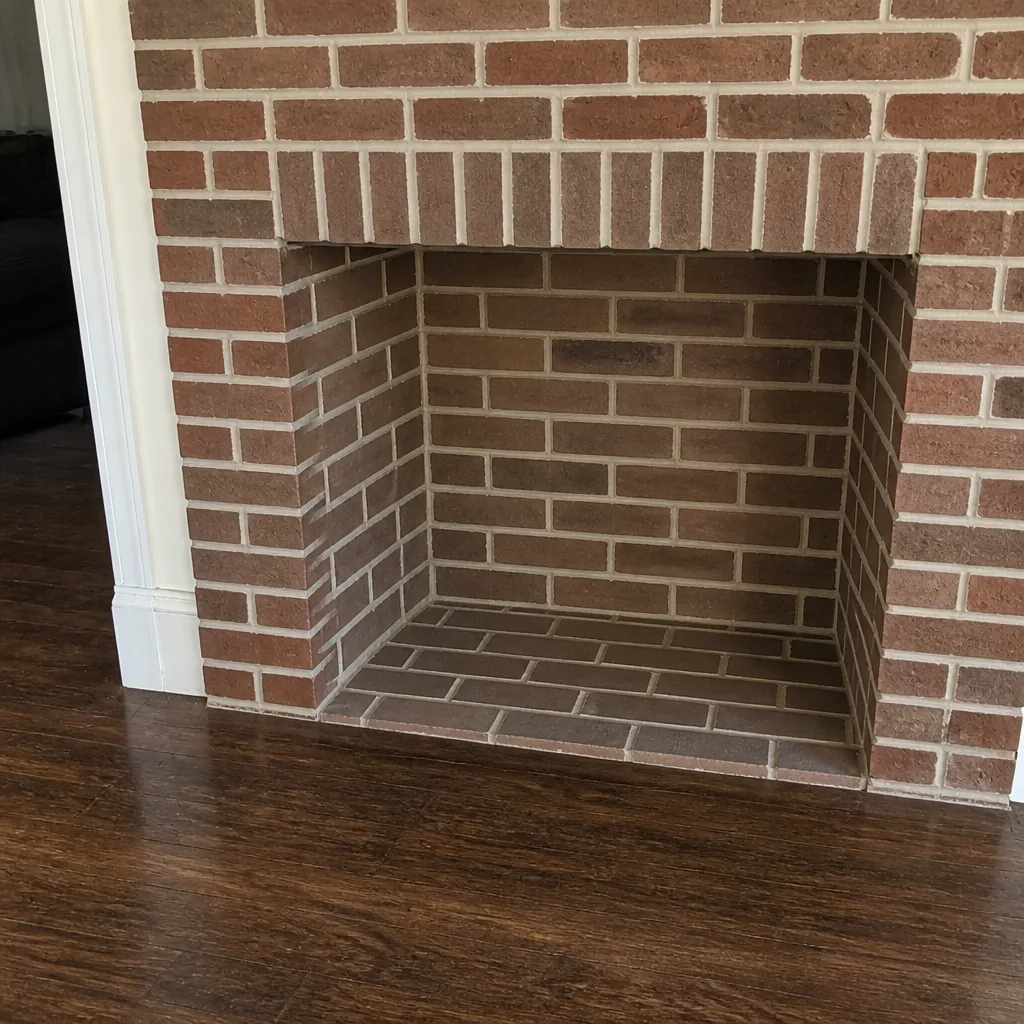 After
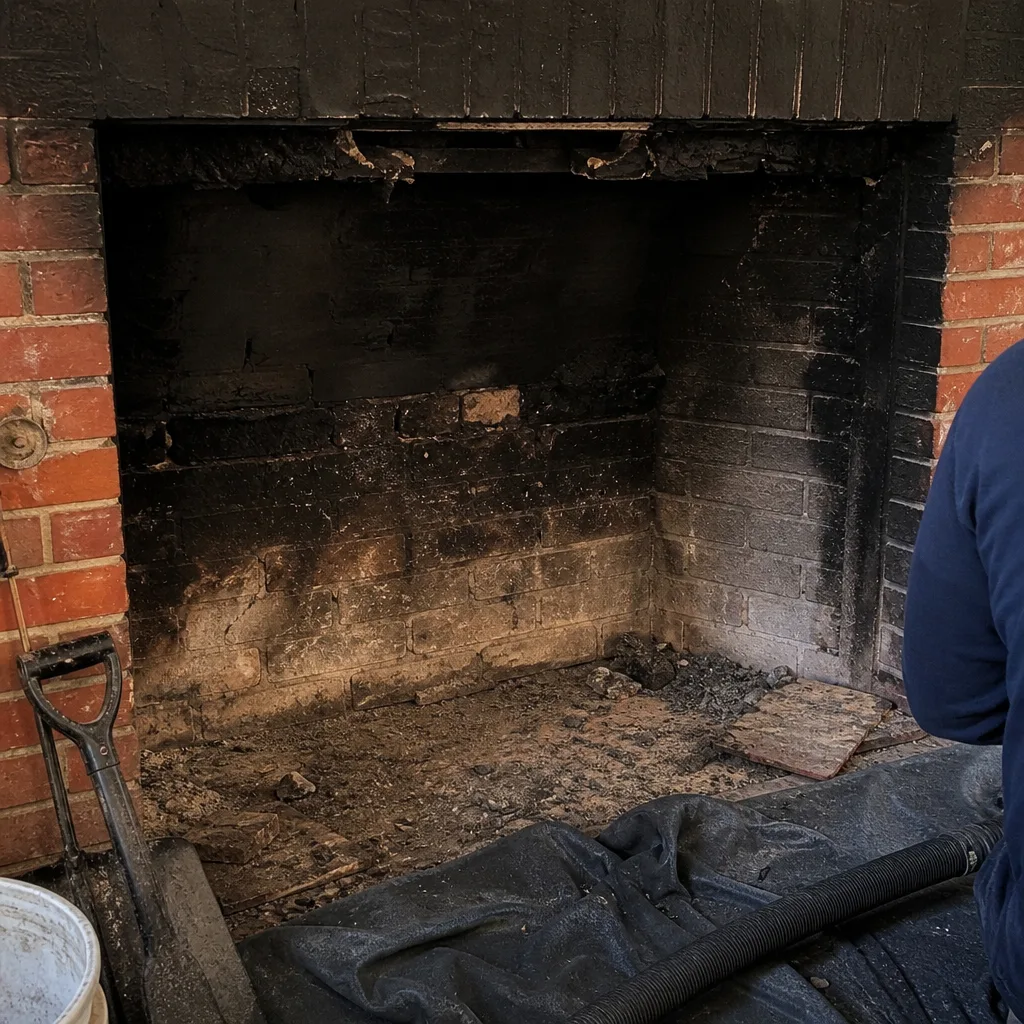 Before
 After
 Before
 After
When to Call a Professional
Call a professional when any of the following apply to your chimney. Any one is enough. The list isn’t exhaustive, and it’s built to err on the side of safety rather than deferral.
- You don’t know when the chimney was last inspected.
- The chimney is more than about two decades old and has never been relined.
- You’ve noticed creosote buildup, a damper that sticks, water staining, or a missing cap section.
- A gas or oil appliance vents through the chimney.
- Any past evidence of a chimney fire, weak draft, or smoke coming back into the room.
- The chimney has a masonry-construction with visible deterioration at the crown or at the exterior mortar joints.
Our technicians have up to 9 years of experience, and we specify products like HeatShield and DuraFlex when the inspection calls for resurfacing or relining. Chimney Sweep Kensington offers free estimates in Kensington. Call (855) 974-3360. We answer 24/7. Fast dispatch from 7am to 7pm, Sunday through Friday. The written estimate sets the final price, and nothing is recommended without camera evidence you can see.
Frequently Asked Questions
You can clean the firebox and ash pit, and you can check the cap and exterior from the ground with binoculars. You shouldn’t sweep the flue interior or inspect the liner unless you have the equipment to see inside it. The assessment is what makes the sweep meaningful, and it’s what DIY brush kits don’t provide.
Once a year for an actively used wood-burning fireplace is the standard benchmark in the trade, and more often if you burn heavily or notice creosote buildup. Gas and oil appliances should be assessed on a professional schedule based on the appliance type. A yearly inspection is the rhythm that keeps you ahead of the structural wear that isn’t visible from indoors.
Creosote accumulates on the flue wall, and at Stage 2 or Stage 3 it turns into fuel for a chimney fire. Beyond the fire risk, skipped sweeps mean the flue isn’t inspected, so hairline cracks and failed mortar joints go unnoticed. Water can reach the masonry through those gaps, and the repair scope widens from a sweep to a relining or rebuild.
You need a new liner when the inspection shows that the current flue can’t safely contain what vents through it, whether that’s failed clay tile, a damaged original liner, or an appliance that wasn’t sized for the flue configuration. In Kensington, most liner replacements come after a camera inspection reveals condition that went unnoticed through years of brushing alone. We specify DuraFlex when relining is the answer, and we say so when it isn’t.
Pricing is set per job by a written estimate, not a flat rate, because the scope includes the inspection and the report. The estimate is free, and the written price sets the final cost. Call (855) 974-3360 for an exact quote; estimates are free.
A sweep removes creosote from the flue; an inspection evaluates the condition of everything the sweep touches and everything it can’t reach. The two are different jobs, and both matter. A professional sweep that doesn’t include a camera inspection and report is doing the cleanup without the assessment, which is why we include the inspection and report with every sweep.
No. Roof access is the leading cause of DIY chimney injury, and cap inspection can be done safely from the ground with binoculars. If the cap needs repair or replacement, that’s professional work. Our chimney cap & crown services are available when the inspection identifies an issue.
The Bottom Line
DIY chimney cleaning is not a skill question. It’s an assessment question. You can learn the brush strokes; you can’t buy the eye and the camera to see what the brush is doing. If your Kensington chimney is newer, recently inspected, wood-burning, and lightly used, the basic maintenance tasks are yours, and we’ll tell you so. If it’s older, uninspected, gas or oil-flued, heavily used, or you simply can’t remember the last time it was examined, the professional sweep with an inspection and report is the decision that pays for itself in what it finds. Our technicians have up to 9 years of experience, and the sweep, the camera inspection, the cap and crown work, and any liner or rebuild that follows all run through one company, from the top of the cap to the firebox floor.
Call Chimney Sweep Kensington at (855) 974-3360 for a free estimate. We answer 24/7. Fast dispatch from 7am to 7pm, Sunday through Friday.
Written by the team at Chimney Sweep Kensington.