
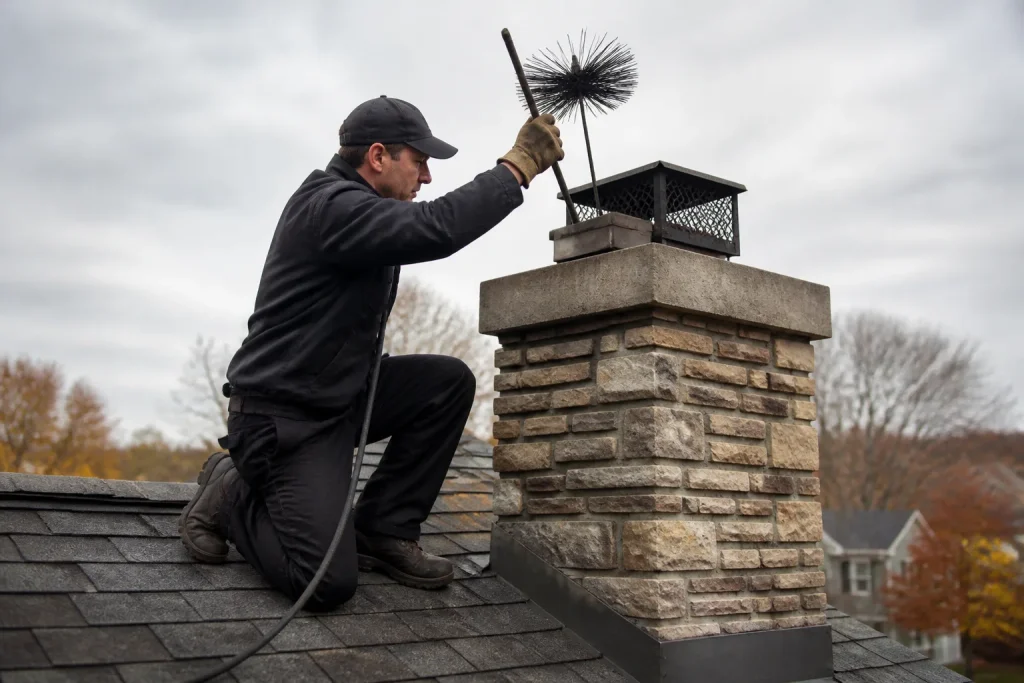
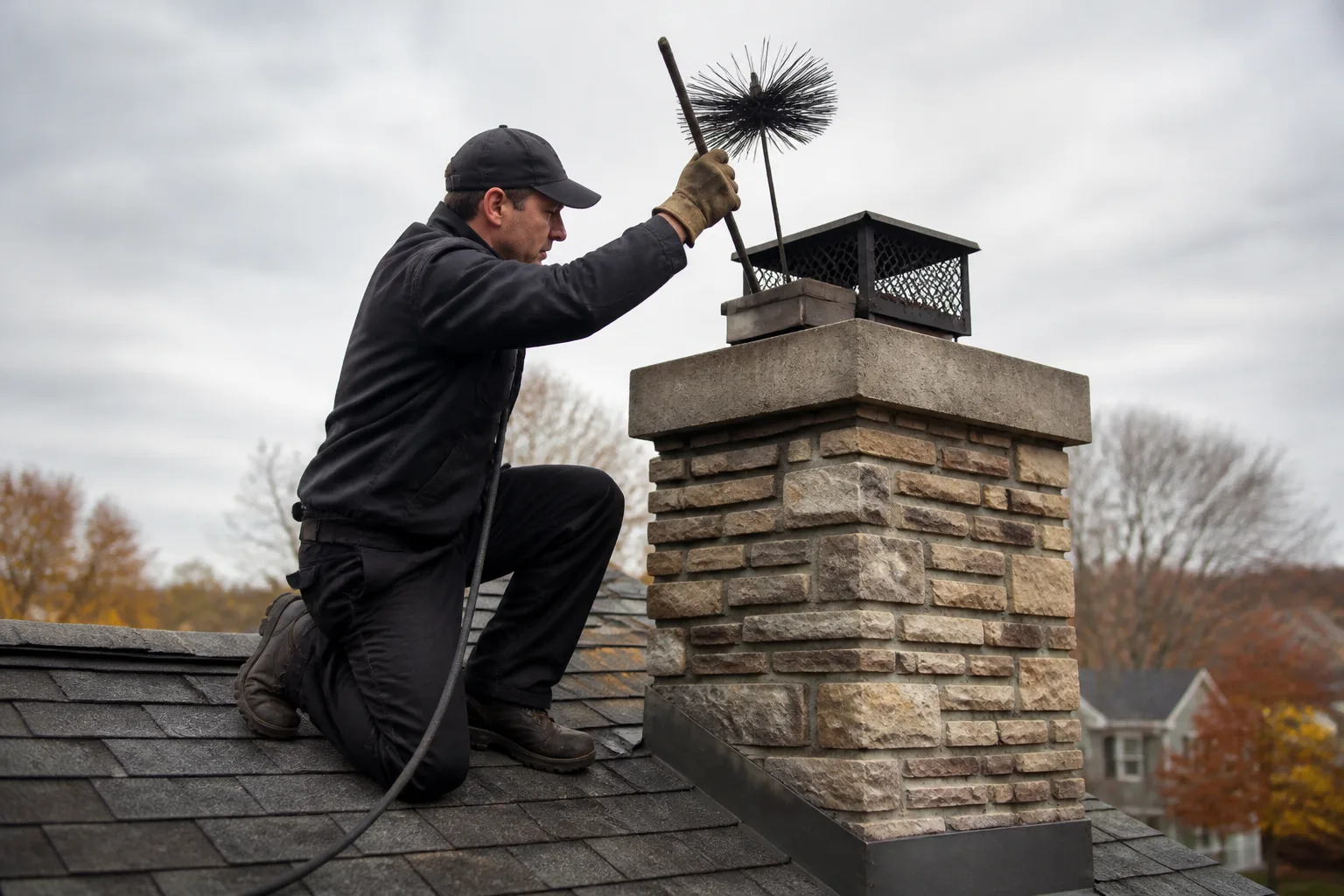
Top Signs You Need Chimney Cleaning Service – Don’t Ignore These
By the time your fireplace is smoking into the room or you can smell creosote from across the house, you’re not in “cleaning” territory anymore. You’re in “inspection for damage” territory. Most homeowners ask us about chimney cleaning only after a warning sign has turned into a real problem, and in our experience the early signals were there for months: a draft that felt a little off, a faint smell on damp days, a bit of dark staining near the damper. Those quiet signs matter more than the dramatic ones. Here’s what to actually watch for in Kensington, and why catching a cleaning need early keeps a small job small.
If you’d rather not climb a roof or guess at what you’re seeing, call (855) 974-3360 and we’ll take a look. We answer 24/7. Fast dispatch from 7am to 7pm, Sunday through Friday.
Which signs actually mean you need a chimney cleaning?
The most reliable cleaning signs are subtle: a draft that pulls less strongly than it used to, a faint smoky or sour smell on humid days, light discoloration around the damper, and a fire that takes longer to catch. You don’t need visible soot or a smoking fireplace to book a sweep. Those obvious symptoms usually show up later, once buildup or a blockage has already started affecting how the chimney vents.
Think of it this way. Visible soot on the firebox walls and a fire that smokes into the room are the chimney’s way of complaining loudly. By the time it’s complaining, the deposit inside has often had months to settle and harden. Here’s what we look for that most people notice first:
- A draft that feels weaker. Fires that used to roar now burn a little lazy, or the smoke hovers before it goes up. That’s a sign airflow is restricted, often by soot, creosote, or a partial blockage.
- A smell on humid days. Creosote and soot smell stronger when the air is damp. If your fireplace room has a faint smoky, sour, or asphalt-like odor in warm, muggy weather, the deposits inside are talking.
- Minor discoloration near the damper. Dark staining or a light dusting of soot around the damper and the top of the firebox is an early warning that buildup is creeping past the smoke shelf.
- Fire behavior changes. More smoke at startup, a fire that’s harder to keep going, or downdrafts on windy days.
- Ash and debris that won’t stay put. Flakes of creosote or soot dropping onto the firebox floor point to buildup above.
None of these is a disaster. All of them are reasons to get a chimney sweep on the calendar before they become one.
Cleaning signs vs. repair signs: how do you tell the difference?
Cleaning signs point to buildup or blockage in a chimney that’s structurally sound. Repair signs point to a problem with the chimney itself: a damaged liner, a cracked crown, failed flashing, or water getting in. The two can look alike, which is why a proper inspection separates them before anyone talks about work. In our experience, the distinction is what protects a homeowner from being quoted for a repair they don’t need, or missing one they do.
Here’s the split we use when we assess a chimney in Kensington:
- Probably cleaning-only: reduced draft, faint odor, light soot near the damper, general buildup after a season of regular burning. The chimney still vents correctly once it’s swept.
- Probably structural or liner: water stains on the ceiling or chimney breast, crumbling mortar or brick spalling outside, a cracked or flaking flue tile, rusted or missing damper parts, and any sign of smoke escaping into the house from somewhere other than the firebox.
A rusted damper, for instance, may just need fireplace repair. A cracked liner is a different conversation. If you’re seeing moisture where it shouldn’t be, our chimney repair work covers everything from masonry to liners, so we can trace the source instead of guessing. The point is simple: get the diagnosis right before you book the fix.
Does burning less often mean you can skip a cleaning?
No. Burning frequency alone is a poor indicator of when you need a chimney cleaning. How you burn matters more than how often: the wood type, its moisture content, and the size of the fire all shape how fast creosote builds up. A chimney can accumulate more dangerous deposit from a few damp, smoldering fires than from many small, hot ones with properly seasoned wood.
In our experience, this is the thing homeowners most often get wrong. They figure a handful of fires over a winter can’t possibly need a sweep. But creosote forms when wood doesn’t burn hot or clean, and damp wood is the usual culprit. Split, well-seasoned wood with a low moisture content burns hot and leaves less behind. Green or freshly cut wood, or big smoldering logs starved of air, leave a lot more.
So the practical answer is: don’t judge by the number of fires you lit. Judge by how they burned. If you’ve been burning damp wood, choking the fire down to make it last, or running the occasional smoky fire, you may be due for a cleaning even if your fireplace saw a light season. This is also why creosote is worth understanding: it’s the fuel behind chimney fires, and it accumulates whether or not you’re burning every night.
What does a technician see that you can’t from the fireside?
A technician looks at the whole system from the top of the cap to the firebox floor, using a camera and a trained eye. From inside the room you see the firebox and a bit of the flue. A professional sees the flue’s full length, the smoke chamber, the damper assembly, the crown, and the flashing, and can tell how much deposit has built up and where. You can’t see any of that from your living room.
What we check during an inspection of a Kensington home generally includes:
- The flue interior: the amount, type, and location of creosote, plus the condition of the flue tiles.
- The smoke chamber and smoke shelf: the transition zone where buildup tends to hide and drafts start to suffer.
- The damper: whether it opens fully and seals correctly.
- The cap and crown: a missing or damaged cap lets water and animals in, and a cracked crown is often the first place water gets a foothold. That’s exactly where our chimney cap & crown work comes in.
- Exterior masonry and flashing: spalling brick, crumbling mortar, and flashing that’s pulled away from the roofline.
The photo report is the part that matters most for a homeowner. You shouldn’t have to take our word for it. If something needs repair, we show you the camera evidence so you can see the condition for yourself.
When does a cleaning turn into a repair?
The conversion point is when creosote, moisture, or a small failure has had enough time to damage the liner or the chimney structure. A timely sweep is a routine maintenance job. Let it go, and the same buildup can contribute to a liner problem that turns a simple cleaning into a much larger repair. That’s the practical reason not to wait on the early signs.
We’ll be honest about the cost gap, because it’s the reason we push early detection rather than drama. A sweep is a modest maintenance item. A liner replacement is a bigger project, and when it’s needed, it’s needed. We use Chimney Sweep Kensington-grade materials from brands the trade trusts: DuraFlex for a full relining where the old flue is past saving, HeatShield for resurfacing a liner that’s damaged but still structurally viable. Choosing between them comes down to your chimney’s actual condition, not a one-size-fits-all upsell.
Here’s the other half of the honest answer. Sometimes work can safely wait. If there’s no active hazard and no water intrusion, a repair can be scheduled, not rushed. We’d rather tell you that than sell you a rebuild you don’t need. What we won’t do is recommend thousands of dollars of liner or masonry work without camera evidence you can see for yourself.
A professional-grade cap and crown, and a proper liner, are what keep water and creosote from turning a cleaning into a rebuild. That’s why we specify real materials rather than patching to pass inspection.
When should you call a pro?
Call a professional when you notice any of the subtle signs above, when your last cleaning is a distant memory, or when you see water, crumbling masonry, or a fire that won’t draw properly. A trained technician can confirm whether you need a cleaning or an inspection for something more, and a chimney sweep is a straightforward, affordable way to find out which. Our technicians have up to 9 years of experience and handle everything from a routine sweep to liner and rebuild work, so you’re not handed off between contractors.
Related services in Kensington: whether you’re due for a chimney sweep or need a closer look at the cap and crown, we can help with either.
Don’t wait for the smell from across the house. Trust the quiet signs.
The Bottom Line
The early warning signs of a chimney that needs cleaning are subtle: a weaker draft, a smell on humid days, light staining near the damper, a fire that behaves differently. Those are the signals worth acting on, and they beat the obvious ones every time, because catching them early keeps a cleaning a cleaning. The clearest indicator isn’t how often you burn but how you burn: dry, seasoned wood in a hot fire leaves far less creosote than damp wood burned slow. And when you can’t see what’s happening inside the flue, that’s what a professional inspection is for.
If you’re in Kensington and need help, Chimney Sweep Kensington offers free estimates. Call (855) 974-3360. We answer 24/7. Fast dispatch from 7am to 7pm, Sunday through Friday. Estimates are free, and a written estimate sets the price before any work begins.
Frequently Asked Questions
The general guidance is to have a chimney swept and inspected once a year, and more often if you burn a lot of wood or notice any of the signs above. Burning frequency isn’t the whole story, though. Damp wood and slow, smoldering fires build creosote faster, so a light-burning household with poorly seasoned wood may need attention sooner than expected. Call (855) 974-3360 for an exact recommendation on your chimney, and the estimate is free.
Yes, to a point. You can watch for a weaker draft, a humid-day smell, discoloration near the damper, and changes in how your fire burns. What you can’t see from the fireside is the condition of the flue and the crown, so the confirmation comes from an inspection with a camera. If the subtle signs are there, book the sweep and let a professional look. Call (855) 974-3360 and we’ll get you on the schedule.
Creosote builds up, and it’s the fuel behind chimney fires, so skipping a sweep raises the risk of a chimney fire over time. Moisture and a neglected cap or crown also let water in, which is the leading cause of chimney deterioration. Left long enough, that can turn routine maintenance into structural or liner repair. None of this is meant to scare you; it’s the plain reason early cleaning is worth it. Call (855) 974-3360 if you’re overdue.
That depends on what’s actually wrong, and it’s a question an inspection answers, not a guess. A cleaning handles buildup in a sound chimney. Liner work addresses a cracked or damaged flue, and whether it’s resurfacing with HeatShield or a full relining with DuraFlex depends on the liner’s real condition. We don’t recommend that kind of work without camera evidence you can see for yourself. Call (855) 974-3360 for a free estimate.
Written by the team at Chimney Sweep Kensington.
Need Chimney Cleaning Help?
Call Chimney Sweep Kensington - the local pro we connect you with is licensed and insured, here with fast help in Kensington.
(855) 974-3360